December 12, 2014 marked my last day of college. Thinking back at the last three and a half years in Evanston, I’ve been fortunate to walk away with a few lessons from my undergraduate years at Northwestern.
My transition into college was difficult. In my freshman year, I didn’t really know how to prioritize so I studied way too hard when I could have focused my efforts elsewhere. However, like anything else you spend hours at, I gradually improved and explored beyond my old comfort zone to ultimately discover things I never thought I would have been capable of achieving had I not challenged myself to do so. I believe one of the reasons why we exist is to push our own limits and to actualize what we at some point never thought ourselves capable of becoming. To me, college was when I really realized just how big the world was, and how much of an immediate impact anyone can have regardless of their age.
Here are 7 things I learned in college:
- Take whatever you’ve been led to believe is possible and think even bigger.
I first learned this lesson at the end of my sophomore year. At the time, one of my best friends, Andrew, and I launched a startup built around the idea of a peer-to-peer model towards college consulting. After validating our core idea, we realized that the current path that we were heading down wasn’t scalable so we needed to figure out a way to reach a lot more students. The answer to that came in the form of a massive open online course. So we spent the nights after we finished our days at our respective summer jobs recording, editing, and creating a comprehensive course. It was brutal. Communication was also difficult since Andrew was studying abroad in Australia, so there would sometimes be half day delays between messages/feedback. But we ultimately completed our courses and launched them in August 2013.
The breakthrough moment came when a week later, hundreds of students had joined our course. Within a month: 875 students. Unreal. I wrote about lessons I learned from that experience here. To put it into perspective, we had thought we had done a pretty good job helping 65 students the year before on a one-on-one basis, but 875?! Launching the Master College Admissions courses was one of the most educational endeavors of my college years. Aside from learning video editing, that time period was important to me because it taught me about overcoming unforeseen roadblocks and how to work through conflicts among co-founders. Most importantly though, it showed me that if you put your head down and work tirelessly for something you believe in, you can completely surpass what you ever thought you were capable of. Seeing the flurry of e-mails coming in at the end of that summer as students joined our courses was the real moment of validation when all the hard work paid off.
To this day, I continue to challenge myself to think bigger and believe I still have a ways to go. I had another breakthrough moment in my junior year with Learnerator when we hit 1 million questions answered. Today as I write this on January 2nd, we’re closing in on 3 million questions answered. Thinking bigger can be hard because it almost always requires you to put aside everything you’ve been taught to date. It often feels counterintuitive. But if you do it, I think you’ll ultimately discover that you’ll be glad you did more often times than not.
- Storytelling is one of the most transferrable life skills you will ever learn.
Learning how to frame stories to different audiences is one of the most important life skills you can learn today. Everyone loves to hear a good story. We live to tell stories. It’s one of the main ways we build rapport and connect with one another. Knowing how to tell stories can help you both personally and professionally. It takes your relationships to a whole new level.
I’ve always loved hearing a great story, and I think I began realizing the importance of storytelling in high school when I competed in Original Oratory (OO). OO is an event where you speak for ten minutes on the topic of your choice. My speeches back then consisted of a collection of personal stories armed with self-deprecating humor. They were a lot of fun and experiencing the responses of my audiences helped me realize the importance of stories. In college, through different opportunities like interviewing for student groups, rushing a fraternity, and going through interviews for internships, I honed my ability to tell stories.
If there’s one thing I think students most often overlook in the job search, I would say it’s the behavioral interview. Whenever I’m mentoring, it’s the one area of the interview process everyone says they’re really good at, even if they really aren’t. To me, the behavioral interview is essentially story time. It’s the time in the interview when you can demonstrate what distinguishes you from every other candidate. I think the most powerful way you can do that is through your stories. Going through a competitive internship recruitment process as a junior, I learned this first hand. There would be moments in which I made a small err in the technical side of the interview, but I believe my hours of effort honing certain stories that demonstrated who I was as a person spoke volumes to the interviewers; enough so that they would overlook the err. It’s human to make an err every once and a while, and what I learned then was that stories can be like safety nets in that they save you just long enough to recover and to come back even stronger.
Mastering storytelling takes a lifetime of trial and error. For me, college was the first time I really consciously worked at it and learned the fundamentals of what works and what doesn’t.
- Saying no can be difficult; but doing so consistently can change the things you focus on in life for the better.
Most of us are raised to believe that should a new opportunity arise, we should say yes to it so that we can just experience it for ourselves. While I agree that experiencing new things is a must, I learned in college that sometimes, saying no is the better thing to do. I joined quite a few student groups in my freshman year but by the halfway point of the year, I felt largely dissatisfied with most of them. Here I was sitting in several weekly hour-long meetings not really doing anything. It was a bunch of grey smoke where students designated themselves as X and Y but there was no real action being done. I remember seeing one business related student group where literally every single member was a VP of something. It was like these student groups only existed for the sole purpose of resting on a few lines of these students’ resumes. It wasn’t long before I started questioning if I should stay in these organizations or not. Fortunately, it was around then when I came across Derek Sivers’ “No more yes. It’s either HELL YEAH! or no” post.
After reading that post, I started putting the lesson into action. I listed the groups I was in, thought about how much of an impact I felt I was able to provide as an individual and how much of an impact the organization as a whole was making, and dropped any organization that I personally didn’t feel fully aligned with. It was one of the best decisions I made in college. Learning the self-discipline of saying no ended up helping me in so many ways later on in college. It allowed me to focus on projects I actually cared about and it allowed real results to be achieved.
One of the biggest complaints I often hear from friends when talking about student groups are the organizational struggles of groups. From my perspective, you really only have two options: spearhead the fix for the organization, or just say no. If you don’t find yourself caring much for the organization because it doesn’t align with your values, then say no. Instead, focus your efforts elsewhere. You’ll be surprised of what you’re capable of when you clear up all that time.
- Study smart, not hard.
This was one of the hardest lessons for me to learn in college. For all my life growing up I studied hard, and did well on tests. But after my first year in college, I started to realize that the difference between studying for a few more hours versus stopping at X hours if I understood all the concepts was really marginal at best. It wasn’t so much about how long I studied, but how deep of an understanding I had on the core intuitions that would be tested. It sounds stupidly simple, but it took me a while to figure that out.
Figuring out how to study smart can be challenging. To me, it boils down to a lot of testing. You need to figure out what works for you and what doesn’t. Like anything, it requires practice. After a little bit of testing, I started to get it down. I quickly realized that learning how to study smart versus hard could have saved me so many hours my first year and a half of college. I wish I had figured it out sooner, but I’m glad I did ultimately figure it out in college. It freed up a lot of time for me to pursue different interests of mine, and led me to largely go through the latter half of college without feeling a great deal of stress towards school, while still performing just as well if not better than before.
- Always set aside time for a side project that interests you regardless of how silly the side project seems.
I think this lesson is fundamentally about making sure you set aside time for yourself. College is a busy time. There’s a lot going on around you and it’s easy to feel overwhelmed. One of the hardest things is figuring out what to focus your time on. If you ever find yourself curious about something, pursue it. At the end of the day, college is a time when you can explore new things with little risk. Whether that means starting a small project with a few buddies just for the hell of it or doing something meaningful with your spare time, make the choice to pursue it. When you do pursue it though, do it wholeheartedly.
I did a lot of random projects in college. Most of them were just for fun and without any real purpose than learning new things, but like anything in life, there were lessons to be pulled from the experience that would come back full-circle later on. From working with a few fraternity brothers to start a basketball league within our fraternity that a year later still draws four to six teams every Sunday to wake up early and play basketball together to creating a self-publishing project that made my imaginary author an Amazon best-seller three times, college was a great time to create and learn ridiculously random things. I never would have thought that I would learn how to cut my own hair in college, but I did, and it’s been a super helpful skill to have. Ultimately twenty years from now, I know I’m never going to remember that one Economics exam. But I most definitely will remember the many fun times with friends and side projects I built throughout college.
I think what each of my side projects taught me was that if you approach anything you do in life with laser-like focus and an open mind towards learning things you don’t already know, you’ll quickly develop your ability to execute. And at the end of the day, the difference between you making something happen and not making something happen is execution.
- Genuine relationships are a two-way street that require both sides to openly and honestly connect with one another.
Whether it’s a friend or a significant other, truly great relationships require both people to be okay with being vulnerable with one another. If one side has reservations towards doing so, the relationship will never truly mature into something that will stand the test of time. People often perceive vulnerability in a negative light, but I think vulnerability is at the core of what it means to be human. In my opinion, being okay with being vulnerable is one of the purest ways of being authentic and aligning with your own values.
Vulnerability reveals the true intentions and nature of individuals. It requires maturity and a high level of self-awareness. We are all more willing to be vulnerable with those we can trust and it is in developing that trust in one another that the greatest relationships are created. Taking part in a leadership class this last quarter where thirty other students were ready to be open and vulnerable with one another really showed me how powerful it can be when you unite individuals behind a goal of creating lasting and meaningful relationships. Genuine relationships are hard to come by, but when you find them, you know it’s something special.
College taught me that it’s not worth your time to cultivate personal relationships with people who aren’t willing to be vulnerable with you. It’s better to just cut ties and to continue to build relationships with people who provide great value or satisfaction to some facet of your life. That’s not to say you won’t be friends with them anymore, but it is to say that you should heed closely to the old saying, “You are the average of the five people you spend the most time with.” There are too many interesting people in the world and there is too little time to try to change someone, so instead focus your efforts on people who are ready to build great relationships with you and grow together. It’ll save you a ton of headaches and make you so much happier at the quality of your personal relationships.
- The only opinion that really matters is your own so define your values for yourself, and live true to them.
Growing up, we are taught to care way too much about what other people think of us, when really we should be caring about what we think of ourselves. It leads us to be prone to Social Comparison Theory. Think about it. Facebook is so often used as a portal in which we all compare our lives to each other. It’s a self-selected highlight reel to share with one another.
We often fail to assess ourselves for what we stand for. I think self-awareness is a developed skill and requires thoughtful and deliberate introspection. Ultimately at the end of your life, it doesn’t matter what anyone else thinks of you. The only opinion that matters is how you think of yourself. Too often in college people waste time talking about how to become “more cool” or how to become perceived as an “elite” organization. My response to this is who really cares? Twenty years from now, are you really going to be asking these questions? Probably not. And if you are, you need to reassess your life. Honestly, the coolest people I know are people who could not care less what other people think of them because they pursue things out of genuine interest rather than out of a perceived social obligation to meet a “standard”.
If there’s ever a point in your life where you feel like you’re not living true to the values that you want to exemplify, then it’s time for a change. The best thing I regularly did in college was I defined my values for myself and frequently asked myself if I felt like I was living them with the things and the people I had around me. Sometimes, the answer was no and when that was the case, it was time to make a change. It’s only from deliberate action and self-awareness that we can live meaningful lives, so stop comparing yourself to others and just do you. You do you and I’ll do me.
I definitely learned a lot more than just seven things in college, but these seven were the ones that popped up first in my head. My college experience wasn’t quite like most students, but I’m glad it played out the way that it did. To me, college was a time of discovery and dynamic learning. It was a time in which I solidified my understanding of myself, my values and the things I want to achieve. I can’t say they were the golden years (since I believe those are still to come), but they certainly were formative.
In closing, if you were a part of it, I’d like to thank you for making the past three and a half years quite remarkable. I cannot wait to see what the next chapter holds.
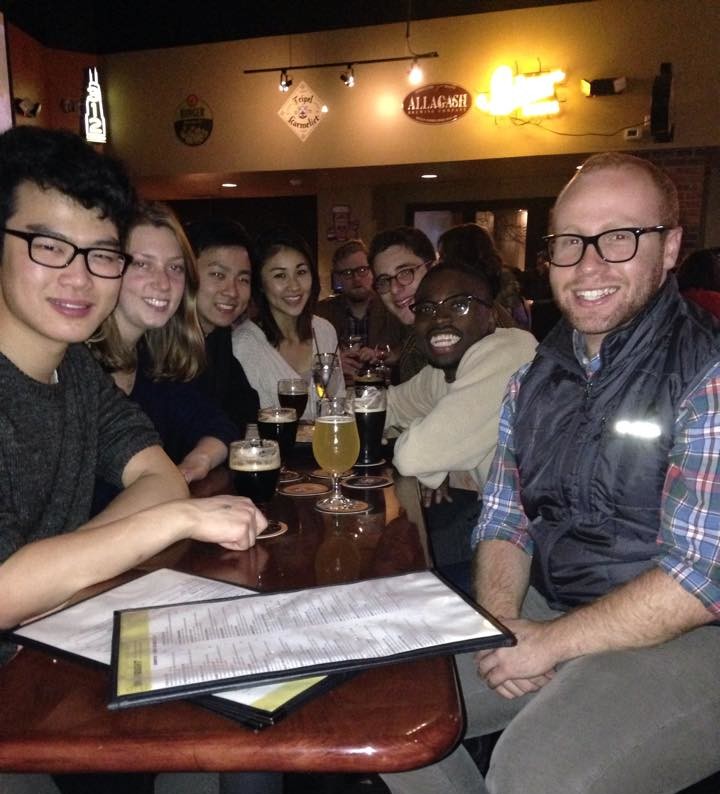
One last hurrah (12/12/14)